Save Time, Money, and Stress by Having a Dedicated Place for Debris Before the Demo Begins
Here's a scenario that plays out constantly in homes across Broomfield, Westminster, and the North Denver metro: someone starts a renovation project — a kitchen gut, a basement finish, a bathroom remodel — without a clear plan for where all the debris is going. Then the drywall comes down, the old cabinets pile up, the flooring gets ripped out, and suddenly the garage is full, the driveway is an obstacle course, and the project has slowed to a crawl because there's nowhere to put anything.
It happens all the time, and it's 100% preventable with one simple step: book a rolloff dumpster before the project starts.
This isn't just convenient — it actively makes your renovation go better. Here's why.
Your Crew (or You) Can Work Without Stopping
Whether you've hired a contractor or you're doing the work yourself, one of the biggest slow-downs in any renovation is debris management. If there's no designated place for waste, work stops every time someone has to deal with a pile that's gotten too big. Bags get stacked, material gets moved twice, and every trip to the truck or the curb is time that could be spent on the actual job.
With a rolloff dumpster on-site, debris goes directly from the work area into the container. No staging, no sorting, no trips. The job site stays cleaner and the work moves faster. Contractors will tell you this is one of the biggest efficiency differences between jobs that have a dumpster and jobs that don't.
It Protects Your Property
Renovation projects generate a lot of sharp, heavy, and bulky material. Old tile, drywall with nails still in it, glass, metal brackets, broken cabinetry — all of it ends up somewhere, and if that somewhere is a pile in your driveway or backyard, you're looking at a hazard and a mess that can damage your lawn, your driveway surface, or your landscaping.
A rolloff dumpster gives that material a contained, designated home from the moment it leaves the house. Nothing piles up on the property, your driveway stays safe to walk and drive on, and your neighbors aren't watching a construction debris heap grow in your yard for three weeks.
It Keeps the Project on Schedule
One thing people underestimate about home renovations is how much debris they generate, and how fast. A kitchen gut on a mid-size home can produce a surprisingly large volume of material in just a day or two — old cabinetry, countertops, flooring, drywall, plumbing fixtures, tile. Without a dumpster, all of that material needs somewhere to go before the next phase of the project can start, and that creates bottlenecks.
When you have a rolloff dumpster on-site from day one, the debris management problem is already solved. Your contractor doesn't have to build in time for hauling runs. You don't have to coordinate trash pickups around the project timeline. Everything is handled in real time as the work happens.
You Avoid the "Trip to the Dump" Math
A lot of DIYers and homeowners try to manage renovation debris themselves by renting a truck or using their own and making trips to the transfer station. This seems like it might save money, but when you actually run the numbers — fuel, time, dump fees, rental cost, and the number of trips required — a rolloff dumpster almost always wins.
More importantly, it wins on time. A kitchen remodel might require six to eight full truck loads of debris. That's a lot of weekend hours spent loading, driving, unloading, and driving back. A rolloff dumpster costs a flat fee, sits in your driveway for the duration of the project, and gets hauled away once when you're done. Simple.
Common Home Renovation Projects That Benefit From a Rolloff Dumpster
Virtually any renovation project generates more debris than people expect, but here are the ones where having a rolloff dumpster on-site makes the most dramatic difference:
Kitchen remodels: Old cabinets, countertops, flooring, drywall, appliances, plumbing fixtures. A kitchen gut is one of the heaviest debris loads in a residential renovation.
Bathroom renovations: Tile, drywall, vanities, toilets, tubs, flooring. Compact spaces produce surprisingly large volumes of demo debris.
Basement finishes or renovations: Depending on the scope, you might be removing old carpet, drywall, drop ceilings, or even doing a full concrete demo. A 15 or 20-yard dumpster is typical for a basement gut.
Roofing replacements: Shingles are dense and heavy, and a full roof tear-off generates a lot of material fast. Most roofing jobs in the Denver metro area use a 15 or 20-yard rolloff.
Flooring replacement throughout a home: Even just pulling up old carpet and pad across a whole house fills a dumpster faster than you'd expect.
Room additions and structural work: Any time walls are coming down, square footage is being added, or the structure is being altered, a rolloff dumpster belongs on-site.
The Right Size for Your Renovation
Quick sizing guide for the most common renovation projects:
- Single bathroom remodel: 10-yard rolloff dumpster
- Kitchen gut: 10 to 15-yard rolloff dumpster
- Multi-room renovation or whole-floor flooring replacement: 15-yard rolloff dumpster
- Full home renovation, basement gut, or large addition: 20-yard rolloff dumpster
Not sure which size fits your specific project? Call us and describe what you're working on — we'll point you in the right direction.
Local, Easy, and Ready When You Are
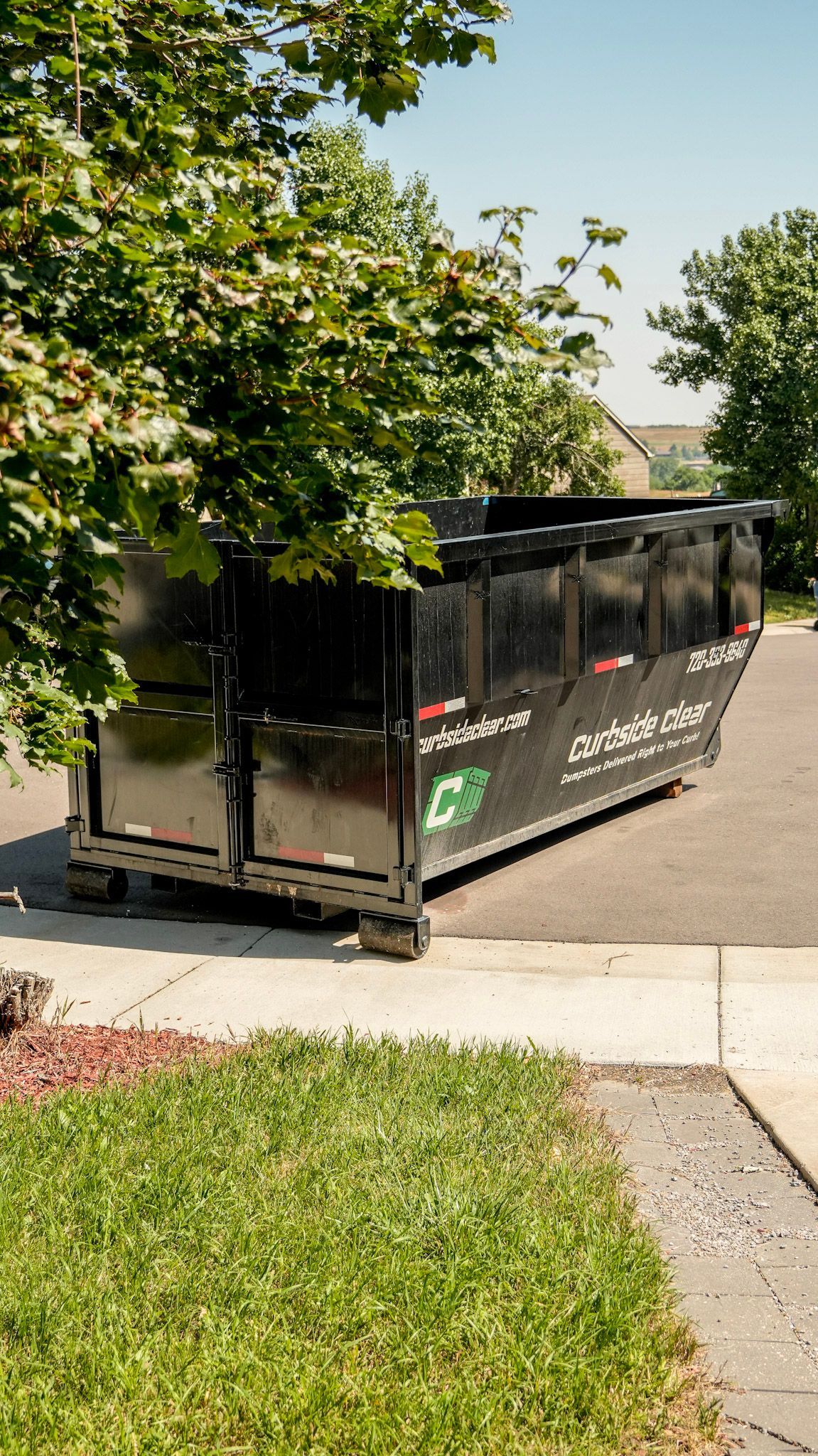
At Curbside Clear, we make it simple to get a rolloff dumpster to your property before the project starts. Book online, pick your size, choose your delivery date, and we'll show up and drop it exactly where you need it. When you're done, we haul it away — no trips to the dump, no hauling debris in your truck, no mess left behind.
We're a local company serving Broomfield, Westminster, and the surrounding North Denver metro area. We're easy to reach, we show up when we say we will, and we're here to make your renovation go smoother.
Book online at curbsideclear.com or give us a call at 720-393-9640. Let's get that project started.